

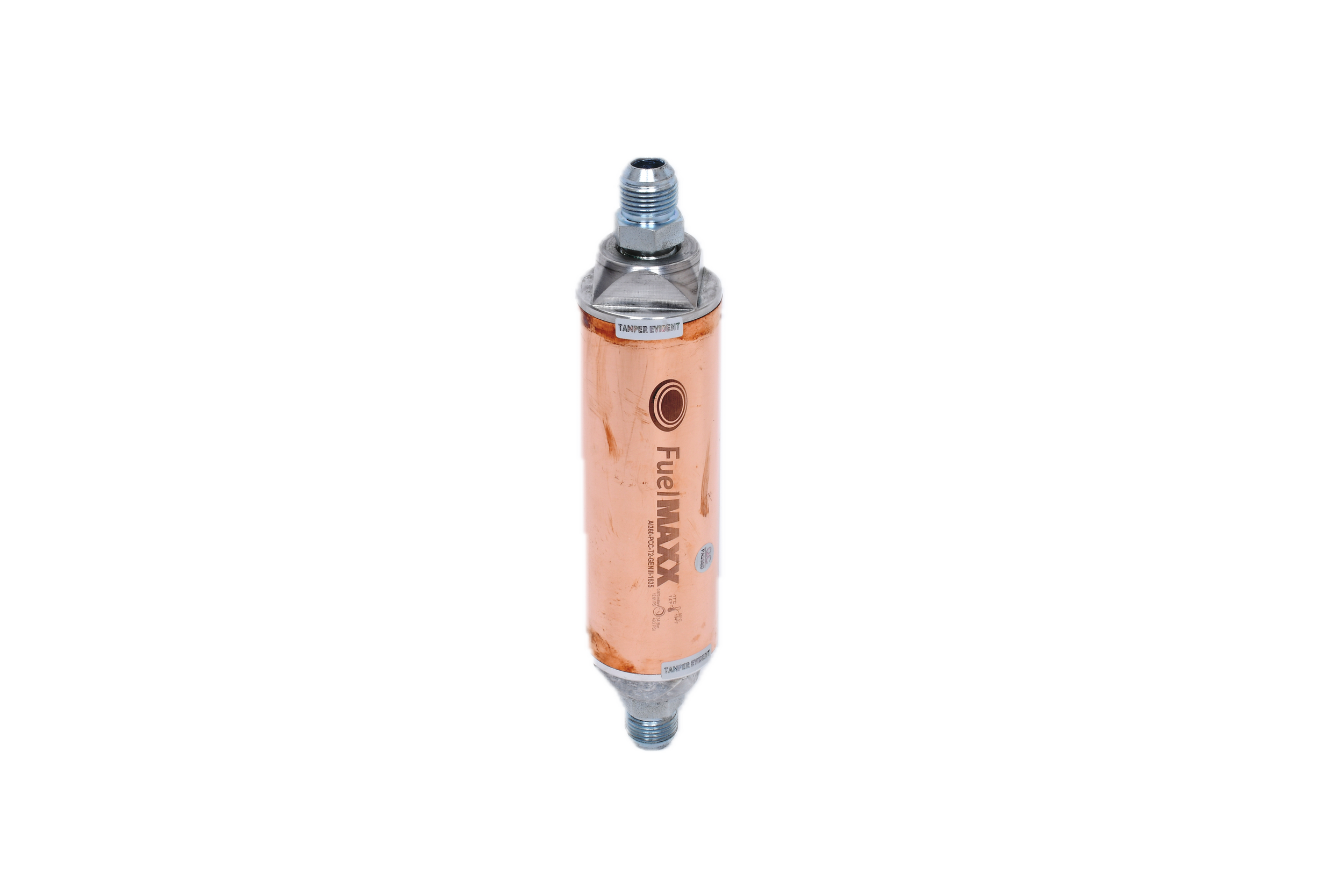
At FuelMaxx, we’re always researching, testing, and innovating—but at the end of the day, the only data that truly matters is how our FMD performs for our customers. Below, you’ll find sampling of reports we have created for a diverse group of customers. It is important to note that all testing and data collection were carried out by the customers’ internal teams, ensuring complete transparency and credibility.
REFERENCES AVAILABLE BY REQUEST
FUEL CONSUMPTION IMPROVEMENT AND GHG EMISSIONS REDUCTION REPORT
GOVERNMENT MINING COMPANY
TABLE OF CONTENTS
Project Particulars
Project Summary
Emissions Reduction Summary
GHG Accounting Summary
Executive Summary
Introduction
Project Setup
Objective
Methodology
Evaluation Metrics
Findings
HT621/HT626
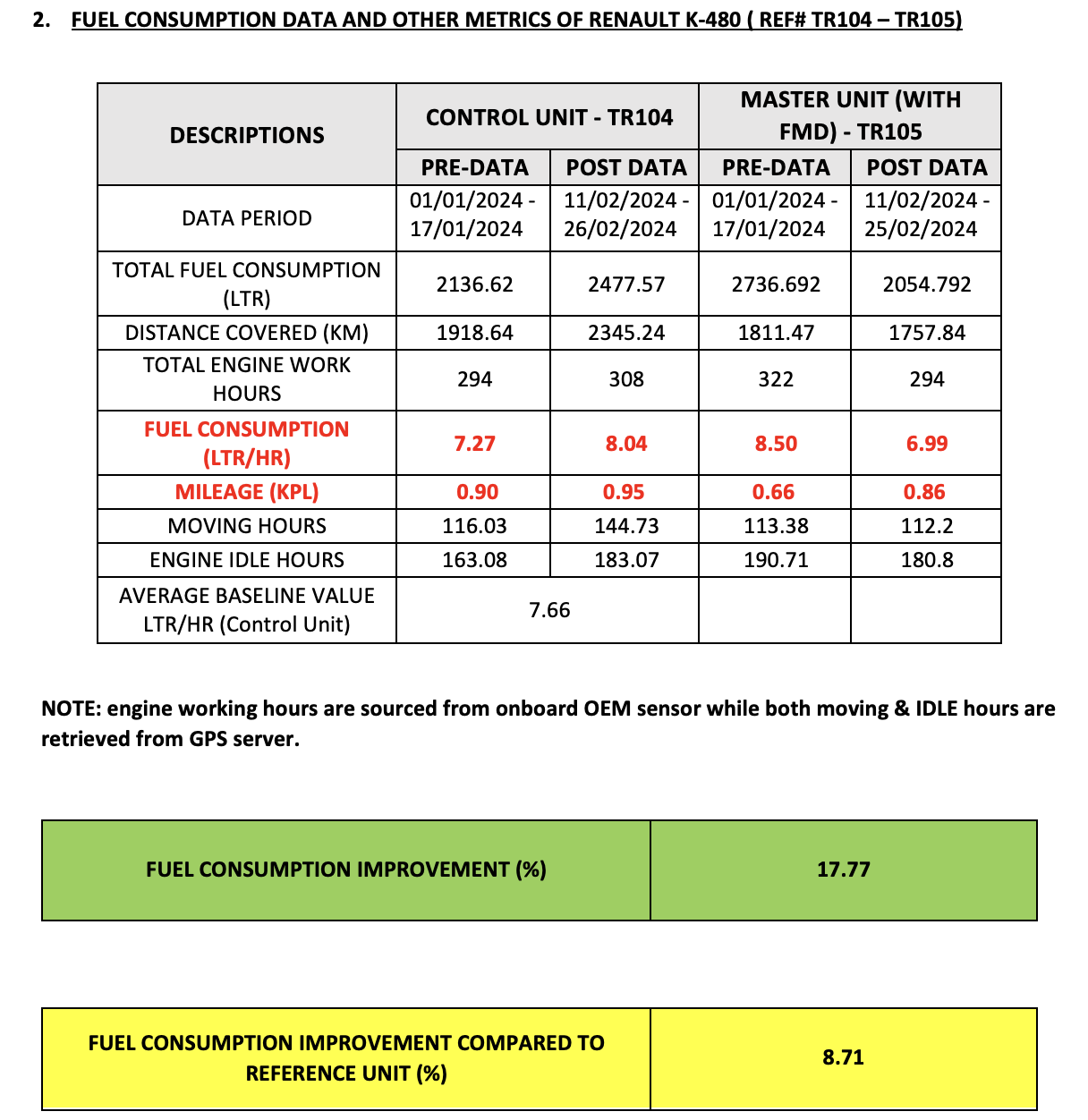
TR104/TR105
HT927/HT929
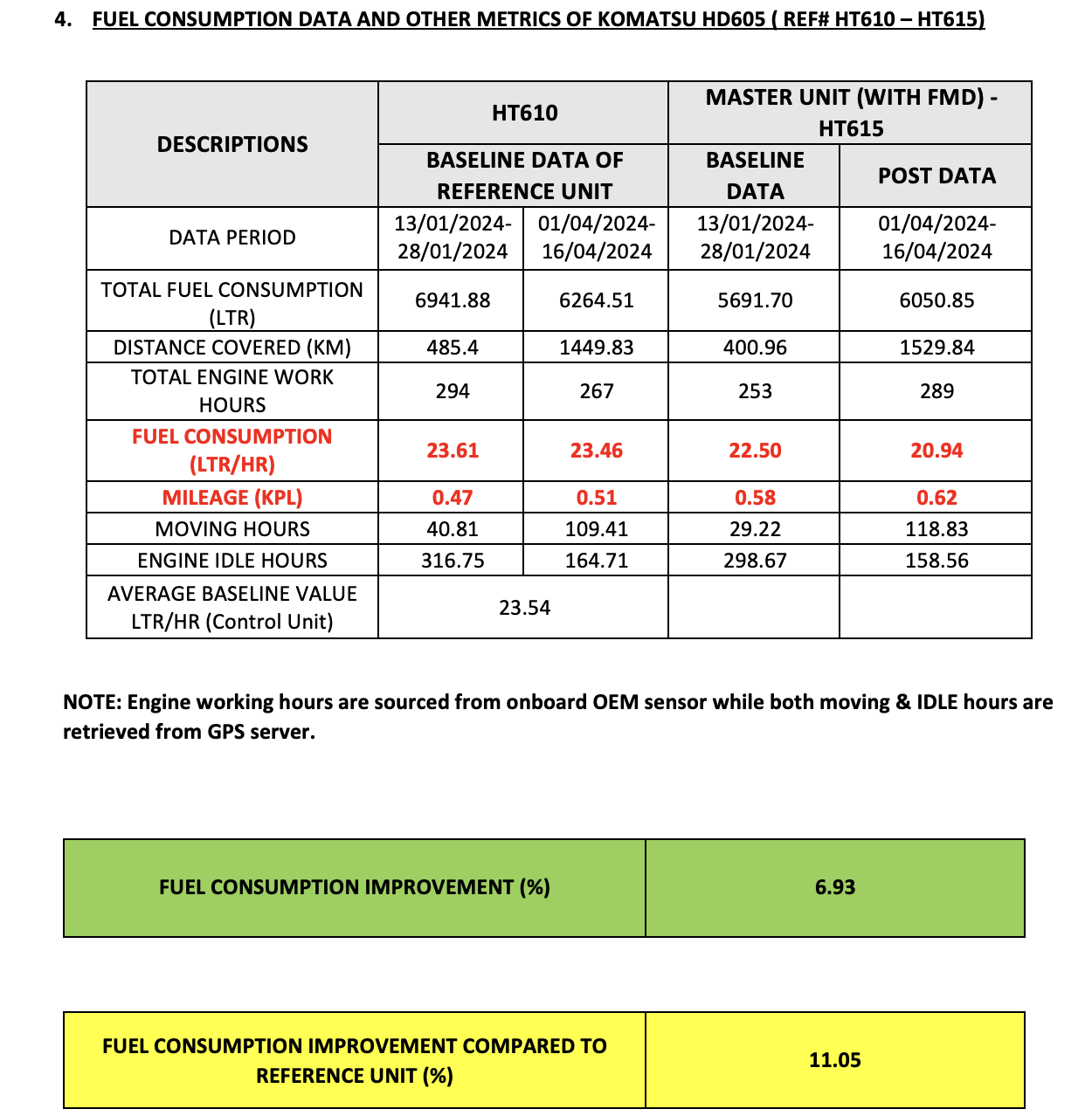
HT610/HT615
Conclusion
Recommendations
GHG Emissions Reduction Report
HT621/HT626
TR104/TR105
HT927/HT929
HT610/HT615
FMD Installation Images
Fuel Data


Note:
1. For GHG Accounting purpose we have considered the operating hours of each vehicle to be 18 hours per day.
2. The metrics provided above are on annual basis.
3. The GWP data is sourced from IFMD AR5
EXECUTIVE SUMMARY:
This technical report presents the findings of a pilot project conducted at Government mining company, uae to evaluate the effectiveness of FMD fuel generators in reducing fuel consumption and emissions in mining trucks. The project involved the installation of fuel generators in selected trucks, followed by a comprehensive analysis of fuel consumption and emissions data. Results indicate a significant reduction in both fuel consumption and emissions post-installation, highlighting the potential benefits of FMD fuel generator usage in mining operations.
INTRODUCTION:
A pilot project was initiated to assess the impact of fuel generator on fuel efficiency and emissions in mining trucks. The project aimed to address environmental concerns while improving operational efficiency. Two trucks of each model were selected for the study with one serving as a control unit and other as a master unit for FMD installation.
This report outlines the execution and analysis of FMD fuel generator project conducted on four sets of mining trucks operated by Government mining company, based in Ras Al Khaimah, UAE. The primary objective was to assess the impact of FMD on fuel efficiency and emissions reduction in the context of mining truck operations.
PROJECT SETUP:
Four sets of mining trucks were selected for this project. In each set, one truck served as the control unit while the other was outfitted with the FMD and designated as master unit. We relied on the client’s fuel fill and running hours data to establish baseline and post installation metrics.
OBJECTIVE:
The primary objective of the pilot project is to assess the impact of fuel generators on fuel consumption and emissions in Government mining company's equipment fleet. Specifically, the project aims to:
· Measure baseline fuel consumption and emissions data.
· Install fuel generators on selected equipment.
· Monitor fuel consumption and emissions post-installation.
· Analyse the data to determine the effectiveness of the fuel generators in reducing fuel consumption and emissions.
METHODOLOGY:
1. Baseline Data Collection:
· Prior to the installation of fuel generators, 250 hours of fuel consumption data were collected from the customer's records to establish a baseline.
· Pre-installation emissions were also assessed using an HPC501 gas analyser.
2. Fuel generator Installation:
· Fuel generators were installed on the selected equipment according to standard guidelines.
3. Clean-up Period
· A clean-up period of 250 hours was observed post-installation to allow the devices to optimize performance.
4. Post Installation data collection
· Fuel consumption and engine running hours data were collected from the Client’s own record for the subsequent 250 hours after the clean-up period.
· Post-installation emissions were assessed using the HPC501 gas analyser.
5. Data Analysis
· Baseline and post-installation data were analysed to determine the reduction in fuel consumption and emissions.

EVALUATION METRICS:
Fuel efficiency improvements were measured in litres per hour, comparing the performance of trucks with and without the FMD. Additionally, we conducted exhaust emissions testing using an HPC501 gas analyser before and after FMD installation to assess changes in emissions levels.
FINDINGS:


CONCLUSION:
The pilot project confirmed the effectiveness of FMD fuel generators in reducing fuel consumption and emissions in mining trucks. Installation of fuel generators led to significant improvements in operational efficiency and environmental performance. These findings underscore the potential benefits of widespread adoption of fuel generator technology in mining operations.
RECOMMENDATIONS:
Based on the positive outcomes of the pilot project, it is recommended to consider implementing FMD fuel generators across the mining truck fleet at Government mining company.