

At FuelMaxx, we’re always researching, testing, and innovating—but at the end of the day, the only data that truly matters is how our FMD performs for our customers. Below, you’ll find sampling of reports we have created for a diverse group of customers. It is important to note that all testing and data collection were carried out by the customers’ internal teams, ensuring complete transparency and credibility.
REFERENCES AVAILABLE BY REQUEST
FORTUNE 500 OIL & GAS COMPANY
FMD FINAL REPORT
Introduction:
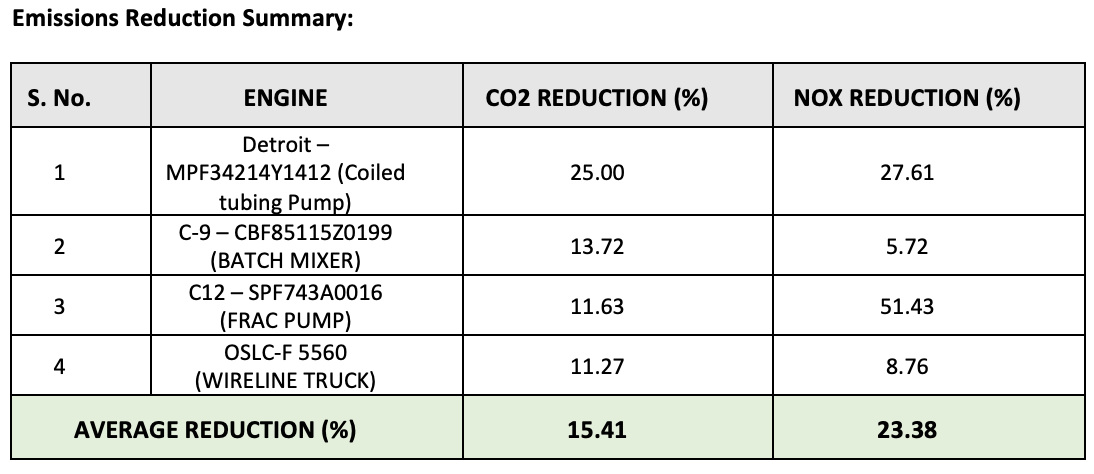
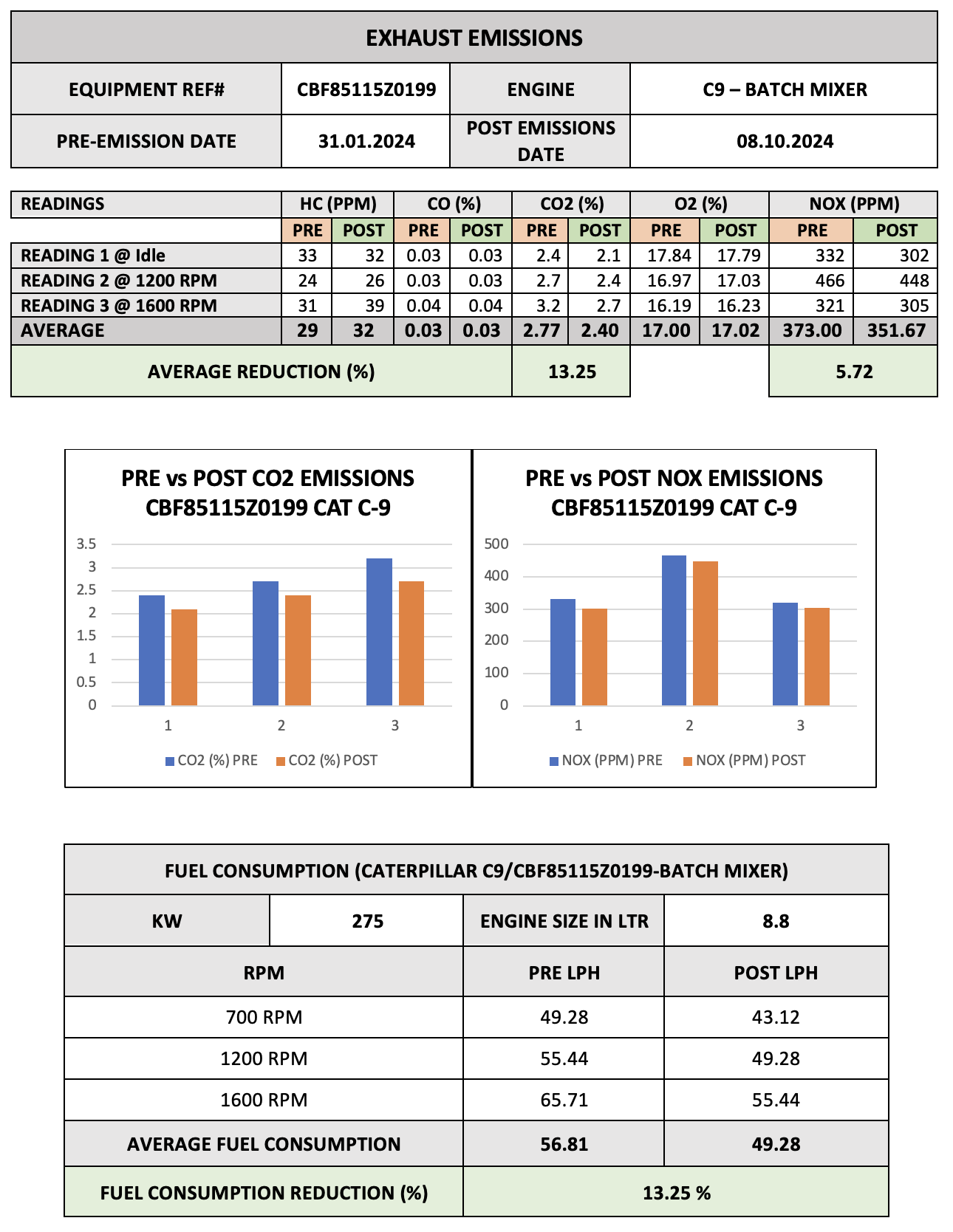
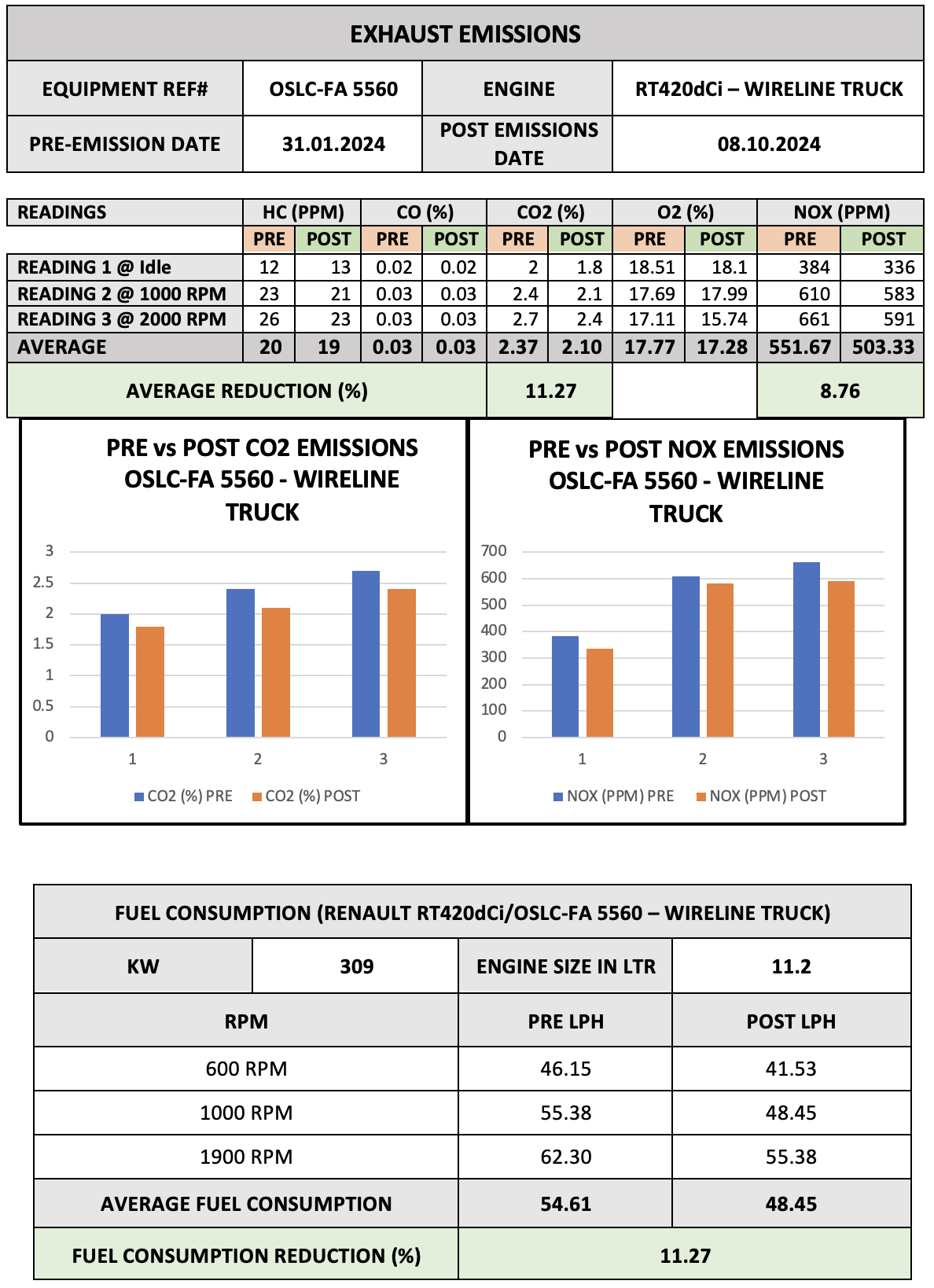
This report outlines the evaluation of emissions reduction and fuel consumption optimization achieved by installing a FMDfuel device i.e. FMD on four diesel engines of FRAC FLEET at Fortune 500 Oil & Gas Company, Oman. The study includes a comparison of pre- and post-installation emissions measurements, gathered using the HPC501 gas analyser. Key emissions parameters measured were hydrocarbons (HC), carbon monoxide (CO), carbon dioxide (CO2), oxygen (O2), and nitrogen oxides (NOx). Based on the emissions data, the fuel consumption in litres per hour (LPH) is calculated for both the pre- and post-installation phases, demonstrating the FMD's impact on improving fuel efficiency.
Pre-Installation Emissions Testing:
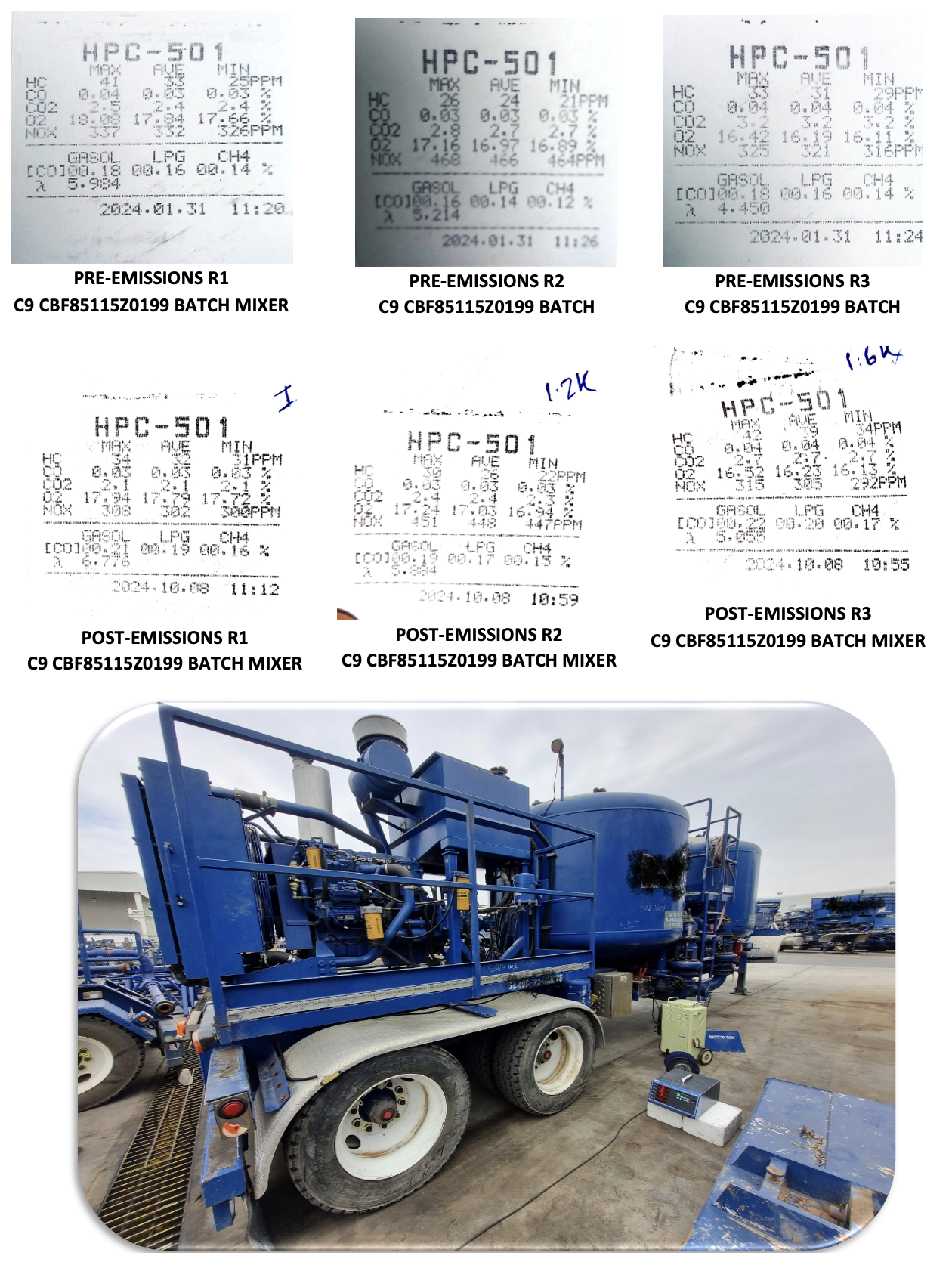
Initial emissions testing was conducted on each engine using the HPC501 gas analyser to establish baseline emissions values.
FMD Installation:
After recording the baseline emissions data, FMD was installed on each of the four engines. The device works by breaking down complex hydrocarbons into simpler molecules, enhancing fuel-air mixture combustion and thus reducing harmful emissions.
Post-Installation Emissions Testing:
Post-Installation emissions testing was conducted after 250+ hours of engine operation with the FMD in place. Using the same HPC501 gas analyser, post-installation emissions data were recorded for comparison with the baseline results.






Reliability:
· Combined engine hours of approximately 2000+ (all 4 test engines)
· No performance related issues observed or reported
· Units performed as per factory design
Conclusion:
The installation of the FMD fuel device on the aforementioned engines resulted in a measurable reduction in fuel consumption and harmful emissions particularly CO2 and NOx levels. These findings demonstrate the effectiveness of the FMD technology in enhancing fuel combustion efficiency and reducing the fuel consumption and GHG impact of the engines.
Overall, the outlined objectives of lowering fuel consumption, GHG emissions & engine efficiency KPI’s were successfully achieved, contributing to both environmental and operational benefits.